



Grok 4.5: xAI's Cursor-Native Frontier Model Is Here
Author: Wu Gui Published: July 14, 2026 Read time: 6 min Category: AI URL: https://devoracore.com/blog/grok-4-5
Grok 4.5 launched on July 8, 2026. It's available in Cursor (all plans), the xAI API, Grok Build, and several model gateways. EU availability is expected mid-July 2026.
What Is Grok 4.5?
xAI's Grok 4.5 is the company's latest frontier model, purpose-built for coding, agentic tasks, and knowledge work. It ships with a 500,000-token context window, configurable reasoning, and native support for web search, X search, function calling, and code execution — all in one model.
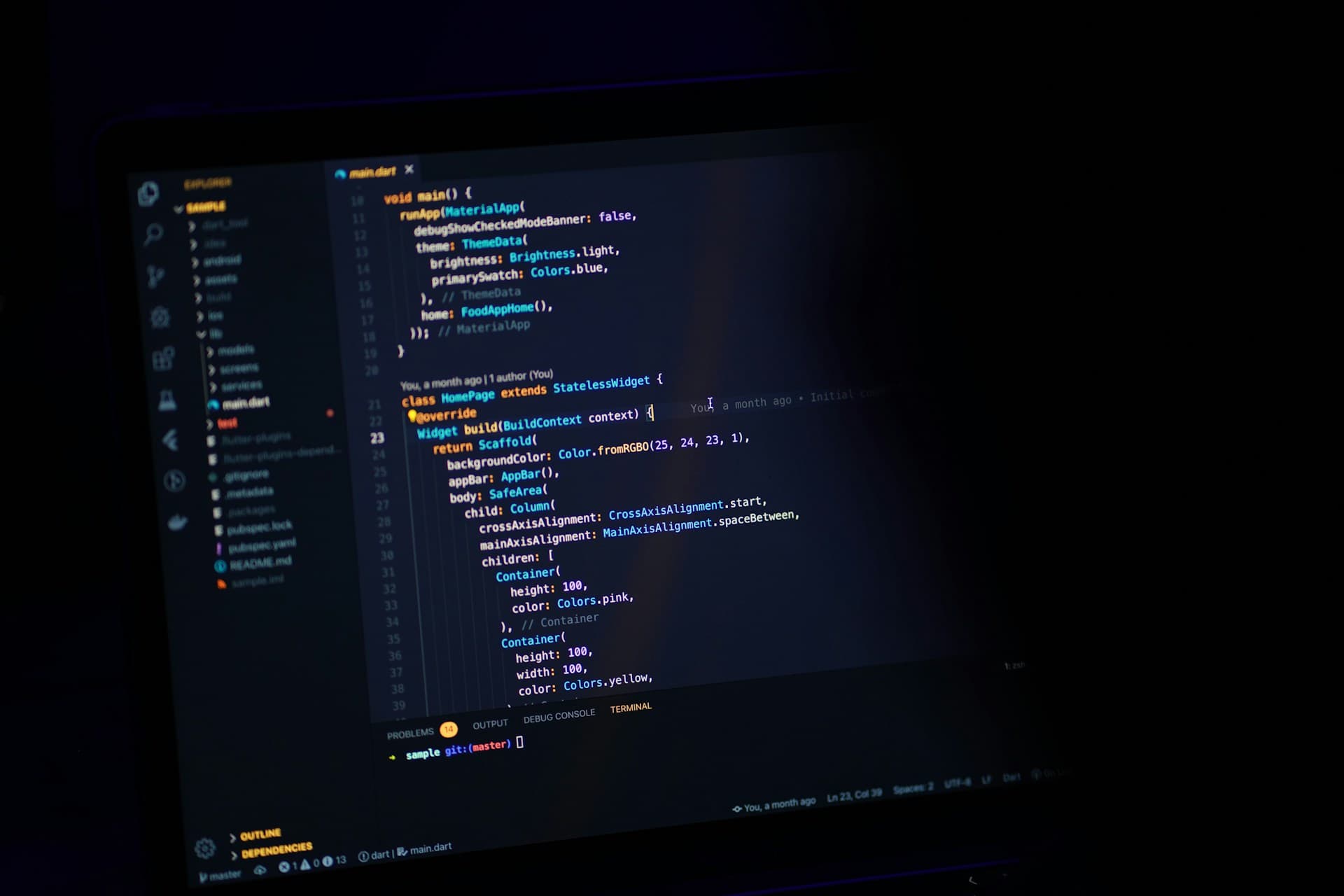
What sets it apart from every other frontier model released so far: Grok 4.5 was trained jointly with Cursor from day one, making it the first model designed with an IDE integration partner baked into the base training rather than added as an afterthought.
Training: Built Inside Cursor from the Start
Most frontier models get bolted onto coding editors through post-training fine-tunes or system prompts. Grok 4.5 is different. xAI trained the model in direct partnership with Cursor, meaning IDE-specific patterns — tab completion, multi-file edits, inline suggestions, project-aware context retrieval — were part of the base training data and reward signals from the ground up.
On the infrastructure side, xAI used tens of thousands of NVIDIA GB300 GPUs out of their Memphis data centers. Training included extensive data curation (deduplication, quality scoring, domain-focused selection) and reinforcement learning scaled across hundreds of thousands of tasks, with a heavy emphasis on multi-step software engineering work graded through both automated and model-based methods.
The result: a model that doesn't just know how to write code, but understands how developers actually work inside an editor.
Key Features
| Feature | Details |
|---|---|
| Context window | 500,000 tokens (~750 A4 pages) |
| Reasoning | Configurable — low, medium, high (default: high) |
| Search | Built-in web search + X (Twitter) search |
| Tool use | Function calling, code execution |
| Caching | Prompt caching via prompt_cache_key |
| Agent optimization | Context compaction for long agentic workloads |
| Input modalities | Text + image |
| Knowledge cutoff | February 1, 2026 |
| Model ID | grok-4.5 |
API Pricing
Grok 4.5 is aggressively priced for a frontier model:
| Token type | Price |
|---|---|
| Input | $2.00 / 1M tokens |
| Output | $6.00 / 1M tokens |
| Cached input | $0.50 / 1M tokens (-75%) |
For comparison: running Grok 4.5 in Grok Build cost $2.49 per agentic task in independent testing, versus $11.80 for Claude Fable 5 in Claude Code and $5.07 for GPT-5.5 in Codex. That's an 80% cost reduction over the current top model, driven by lower per-token pricing and a model that natively uses fewer tokens to get the job done.
Benchmark Performance
Intelligence Index
On the Artificial Analysis Intelligence Index, Grok 4.5 scores 54, placing it 4th overall — behind Claude Fable 5, GPT-5.5, and Claude Opus 4.8, but ahead of all open-weights models and Google's Gemini lineup. That's a 16-point improvement over Grok 4.3, bringing xAI squarely to the intelligence frontier.
Coding & Software Engineering
Grok 4.5 holds its own on the hardest real-world coding benchmarks, trading blows with models that cost significantly more:
| Benchmark | Grok 4.5 | GPT-5.5 | Fable 5 | Opus 4.8 |
|---|---|---|---|---|
| DeepSWE 1.0 | 62.0% | 64.31% | 66.1% | 55.75% |
| DeepSWE 1.1 | 53% | 67% | 70% | — |
| SWE Marathon (pass@1) | 29.0% | — | 24.0% | 26.0% |
| Terminal Bench 2.1 | 83.3% | 83.4% | 84.3% | — |
| SWE Bench Pro | 64.7% | — | 80.4% | — |
| Harvey Legal Agent | #1 | — | — | — |
The SWE Marathon result is notable: Grok 4.5 outperforms both Fable 5 and Opus 4.8 on pass@1, despite being a fraction of the cost. The Harvey Legal Agent ranking is another standout — a domain where no one expected a coding-focused model to lead.
Professional Knowledge Work
On Snorkel's GDPVal+ suite (~2,000 real professional tasks spanning legal, healthcare, education, and QA), Grok 4.5 outperforms both GPT-5.5 and Opus 4.8 across the board:
| Domain | Grok 4.5 | GPT-5.5 | Opus 4.8 |
|---|---|---|---|
| Overall mean | 29% | 22% | 21% |
| Legal | 40% | 27% | 28% |
| Education | 58% | 42% | 35% |
| Healthcare | 35% | 25% | 23% |
| QA Analysis | 37% | 27% | 19% |
These gains are concentrated in tasks that demand deep professional judgment, not just pattern-matching or recall — which suggests the RL training on complex multi-step tasks is transferring well beyond software engineering.
Speed
- Output speed: 112.7 tokens/second (roughly 50% faster than the benchmark average for reasoning models)
- Time to first token: 9.70 seconds
- Average tokens per task (SWE): 1.9M — versus far higher for comparable models
Token Efficiency
Token efficiency is Grok 4.5's structural advantage. On SWE Bench Pro tasks, it averaged 15,954 output tokens per task versus 67,020 for Opus 4.8 (max) — a 4.2× reduction. This directly translates to lower cost per solved task, faster wall-clock time, and lower latency in agentic loops.
Where Grok 4.5 Falls Short
No honest review skips the weaknesses. Independent testing shows Grok 4.5's hallucination rate increased from 25% to 54% compared to its predecessor — alongside an accuracy improvement from 35% to 52%. The model knows more but is also more confident when it's wrong.
On DeepSWE 1.1, it trails GPT-5.5 (67%) and Fable 5 (70%) by a meaningful margin. And on SWE Bench Pro resolution rate (64.7%), Fable 5 still leads significantly at 80.4%.
For production agentic systems where factual precision matters, the elevated hallucination rate is worth keeping in mind — especially in domains like healthcare or finance where the model also shows strong benchmark performance.
Availability
| Platform | Status |
|---|---|
| Cursor | Available on all plans |
| xAI API | Live (grok-4.5) |
| Grok Build | Live (limited-time free tier) |
| OpenRouter | Live |
| EU (API + products) | Expected mid-July 2026 |
API endpoints: Responses API and Chat Completions, both available via api.x.ai.
The Bottom Line
Grok 4.5 is a genuine frontier model at a non-frontier price. It won't dethrone Fable 5 or GPT-5.5 on raw capability, but for developer workflows — especially inside Cursor — it brings first-class IDE-native intelligence at a fraction of the cost. The 500K context window, token-efficient reasoning, and built-in tool use make it particularly well suited for long agentic coding sessions where every token and every dollar counts.
If you're building coding agents or working inside Cursor, Grok 4.5 is the most cost-effective frontier option available today.
Two Frontier Models in One Week
Kimi K3 — Moonshot's 2.8-trillion-parameter open model — dropped just days after Grok 4.5, making July 2026 one of the most eventful weeks in frontier AI this year. Where Grok 4.5 is a closed, Cursor-native coding powerhouse, Kimi K3 goes the opposite direction: open weights, 3T-class scale, and a focus on agentic knowledge work. Two very different philosophies, same week. See our full Kimi K3 coverage.
Sources
Comments
Leave a comment
Related articles

Claude Fable 5.1: Same $10/$50 Price, 75% Cheaper Cache Reads, and Benchmarks That Double the Gap
Claude Fable 5.1 is live — same $10/$50 rate card as Fable 5, but cache reads drop 75% to $0.25/1M, cutting typical workload cost ~25% and agentic cost up to ~45%. Full benchmark table vs. Fable 5, Opus 5, and GPT-5.6 Sol.

Claude Max Weekly Limits: The 50% Summer Boost Becomes a Permanent 25% Raise — Math Included
Anthropic's temporary 50% Claude Code weekly boost ends September 13. On September 14 a permanent 25% increase to baseline limits takes over — a net ~17% cut for active users. The math, the timeline, what stays doubled.

Ox Alpha: The Anonymous 1M-Context Coding Model That Has Everyone Guessing Z.ai
Ox Alpha is a free, anonymous 1M-context reasoning model on OpenRouter. Community fingerprinting points to Zhipu AI's GLM-5.x. We break down the benchmarks, the mystery, and the adoption.