

LingBot-Map: Feed-Forward 3D Foundation Model That Actually Works at Scale
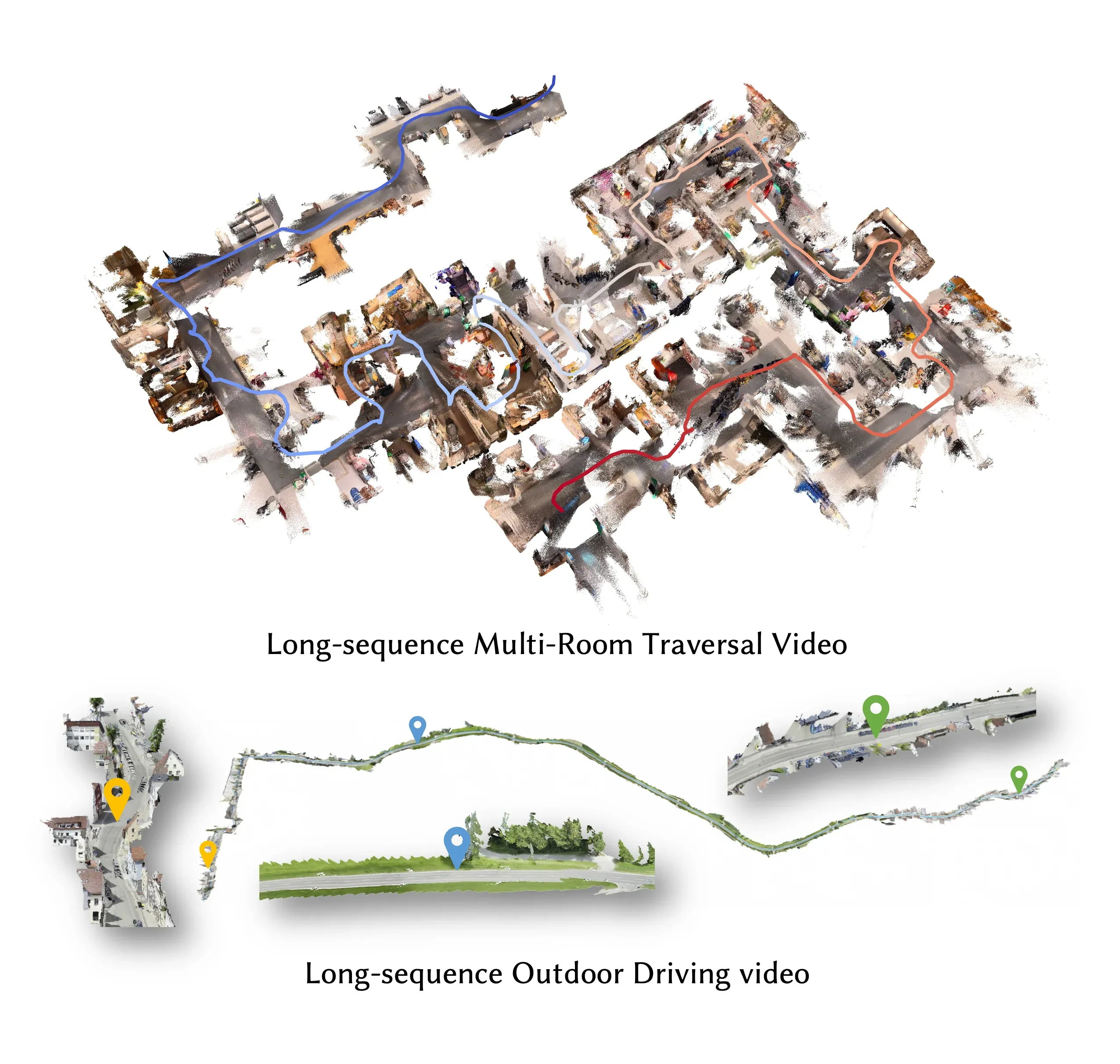
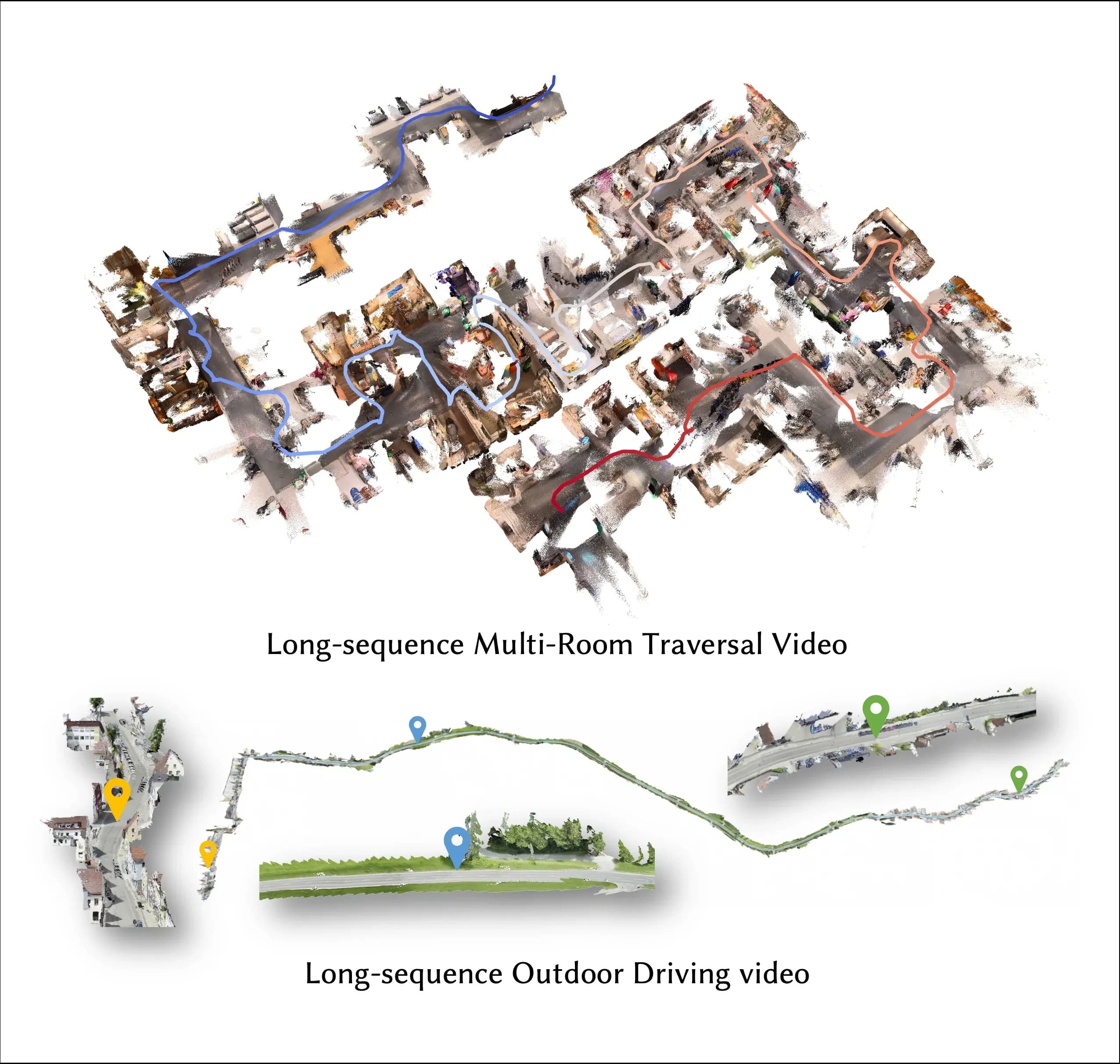
Robbyant (Ant Group) just dropped LingBot-Map — a feed-forward 3D foundation model that does real-time streaming reconstruction from plain RGB video. No LiDAR. No depth sensors. A single consumer GPU, running at 20 FPS on 518×378 input, handles 10,000+ frame sequences with almost flat memory growth.
What It Does
The model estimates camera poses, depth maps, and point clouds on the fly, directly from a video stream — no offline batch processing required. That's the difference between a research demo and something you could actually ship on a robot or a phone.
How It Works: the Geometric Context Transformer
The core trick is the Geometric Context Transformer (GCT), built from three attention layers, each solving a different piece of the streaming-3D problem:
- Anchor Context — grounds the running reconstruction in a stable coordinate frame
- Pose-Reference Window — supplies dense geometric cues from nearby frames
- Trajectory Memory — compresses each frame down to six tokens, which is what keeps drift under control over long runs
The payoff: 80× lower memory growth than standard causal attention, which is why performance barely moves even as sequence length jumps from 320 to 3,840 frames.
Benchmarks
The numbers are not close:
| Benchmark | LingBot-Map | Next best |
|---|---|---|
| Oxford Spires (ATE) | 6.42 m | 18.16 m |
| ETH3D (Reconstruction F1) | 98.98 | 77.28 |
| Tanks & Temples (ATE) | 0.20 m | 0.76 m |
| 7-Scenes (ATE) | 0.08 m | — |
That's roughly 3× better on Oxford Spires and a 21-point F1 lead on ETH3D — not an incremental win, a different tier.
Training
Training ran in two stages across 29 mixed datasets spanning indoor, outdoor, synthetic, and real-world footage. Stage two adds GCT-attention (GCA) scaling, growing the view count from 24 to 320. The model, weights, and technical report are released under Apache 2.0 on GitHub, Hugging Face, and ModelScope — and it's already at 11.5k GitHub stars within weeks of release. The underlying research is detailed in the arXiv paper on the Geometric Context Transformer.
SLAM pioneer Andrew Davison called it "impressive SLAM thinking." LingBot-Map sits inside Robbyant's broader embodied-AI stack alongside LingBot-Depth, LingBot-VLA, LingBot-World, and LingBot-VA — all open source.
Why It Matters
For robotics, this closes a real gap: cheap RGB cameras can now stand in for expensive LiDAR rigs in mapping and localization pipelines. The distance between academic SLAM research and deployable embodied perception just got a lot shorter.
Previous post on frontier open models: Grok 4.5: xAI's Cursor-Native Frontier Model Is Here.
Comments
Leave a comment
Related articles
Claude Fable 5.1: Same $10/$50 Price, 75% Cheaper Cache Reads, and Benchmarks That Double the Gap
Claude Fable 5.1 is live — same $10/$50 rate card as Fable 5, but cache reads drop 75% to $0.25/1M, cutting typical workload cost ~25% and agentic cost up to ~45%. Full benchmark table vs. Fable 5, Opus 5, and GPT-5.6 Sol.
Claude Max Weekly Limits: The 50% Summer Boost Becomes a Permanent 25% Raise — Math Included
Anthropic's temporary 50% Claude Code weekly boost ends September 13. On September 14 a permanent 25% increase to baseline limits takes over — a net ~17% cut for active users. The math, the timeline, what stays doubled.
Ox Alpha: The Anonymous 1M-Context Coding Model That Has Everyone Guessing Z.ai
Ox Alpha is a free, anonymous 1M-context reasoning model on OpenRouter. Community fingerprinting points to Zhipu AI's GLM-5.x. We break down the benchmarks, the mystery, and the adoption.